Llamas and South American Camelids: Biology, Habitat, Care & Andean History
Explore verified scientific, historical and practical resources on Lama glama and the South American camelid family (Lamini). Every guide cites primary academic, veterinary and museum sources—from FAO husbandry manuals and Merck Veterinary Manual chapters to whole-genome domestication studies.
Biological profile and physiological constants of the llama (Lama glama)
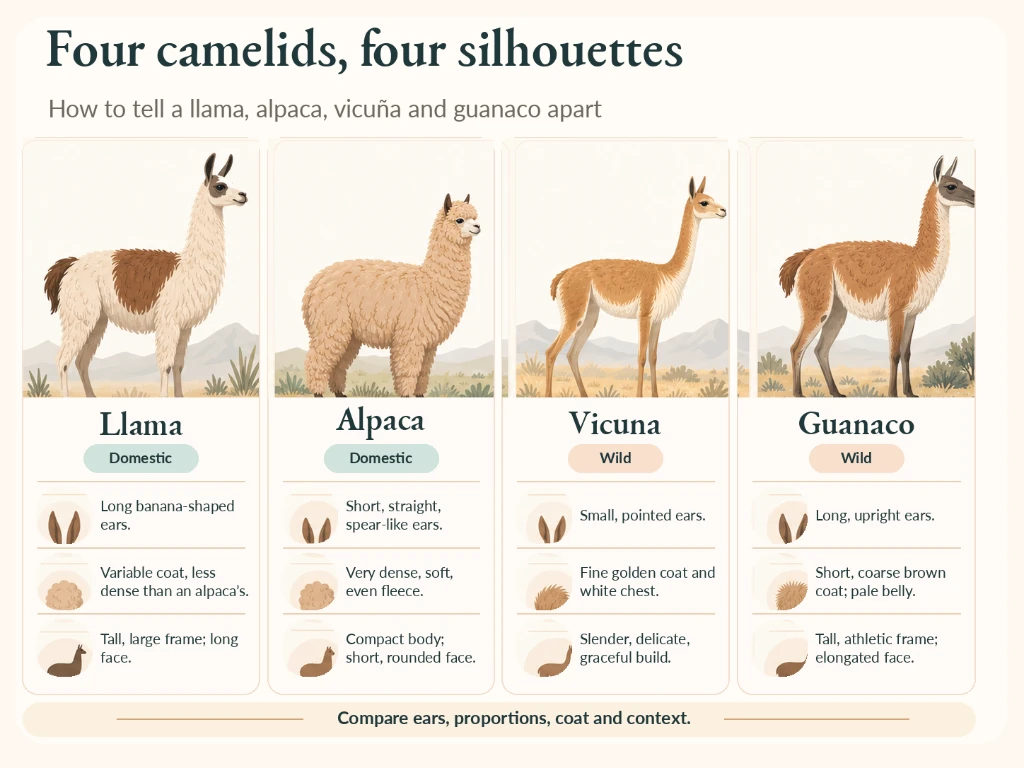
The llama (Lama glama) is the largest domestic South American camelid. Together with the domestic alpaca (Vicugna pacos) and the wild guanaco (Lama guanicoe) and vicuña (Vicugna vicugna), it forms the tribe Lamini within the family Camelidae. All four species share a karyotype of 2n = 74 chromosomes and adapted over millions of years to high-altitude hypoxia, fibrous forage and arid mountain environments.
Taxonomic classification & genetics
Order / Suborder: Artiodactyla · Tylopoda (padded feet)
Family / Tribe: Camelidae · Lamini (South American camelids)
Scientific name:Lama glama (Linnaeus, 1758)
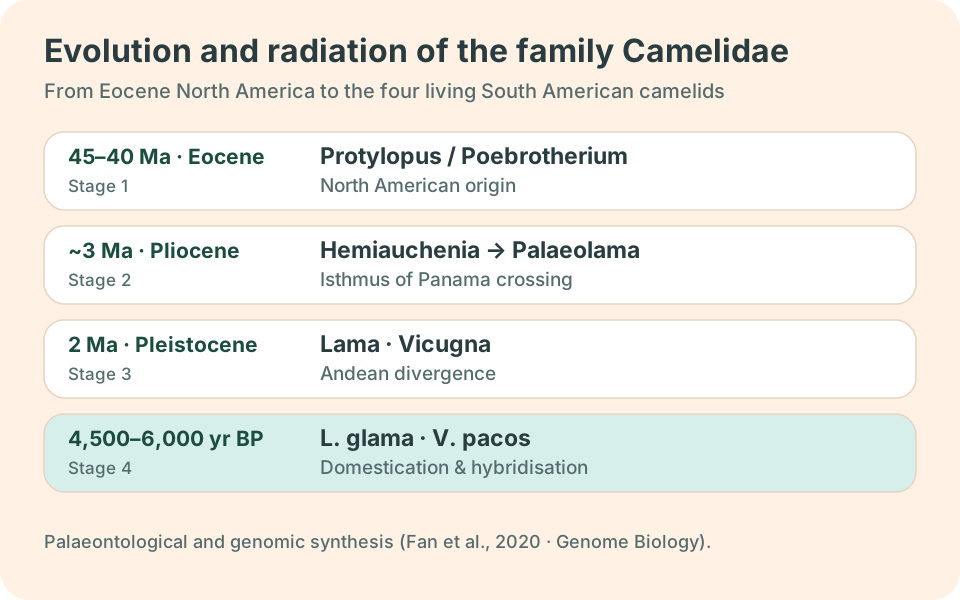
Wild ancestor: Guanaco (Lama guanicoe), domesticated ~4,000–5,000 years BP in the Andes
Karyotype:2n = 74 (fertile hybrids with alpaca: huarizo / misti)
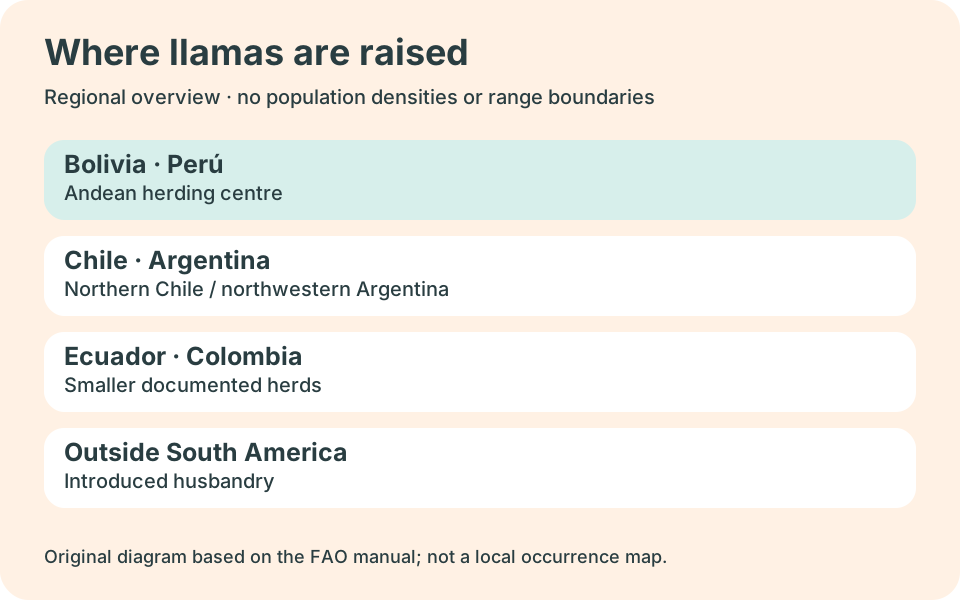
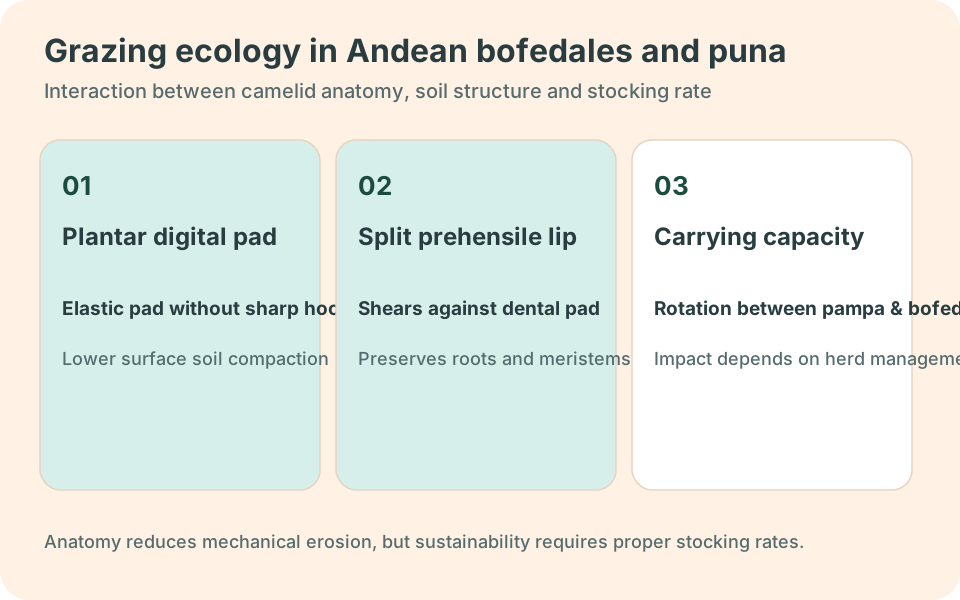
Distribution across Peru, Bolivia, Chile, Argentina, Ecuador and Colombia, elevation ranges (2,300–5,000 m), puna wetlands (bofedales) and low-impact grazing mechanics.
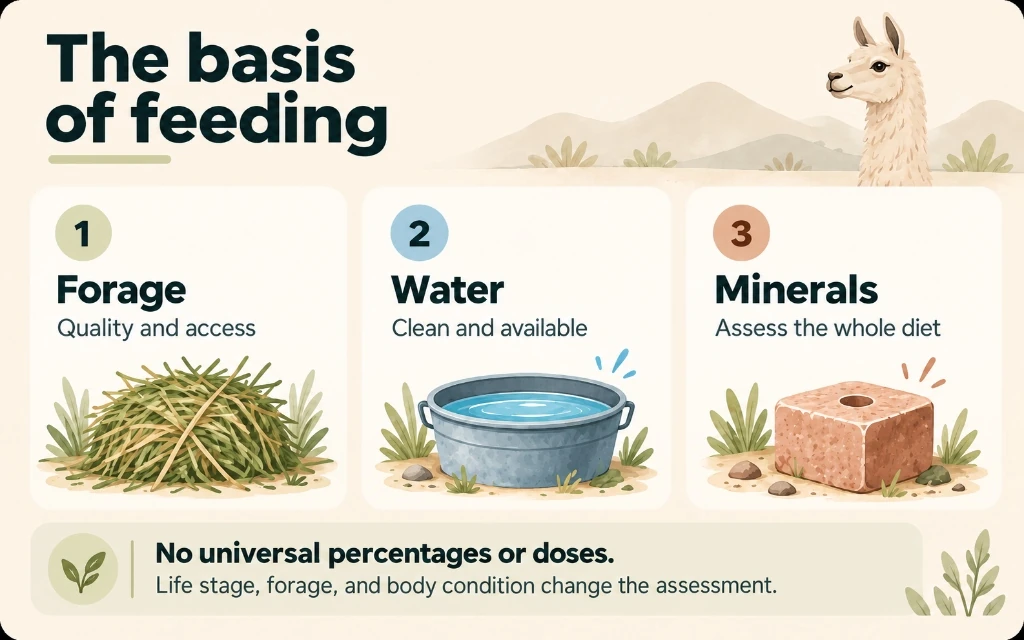
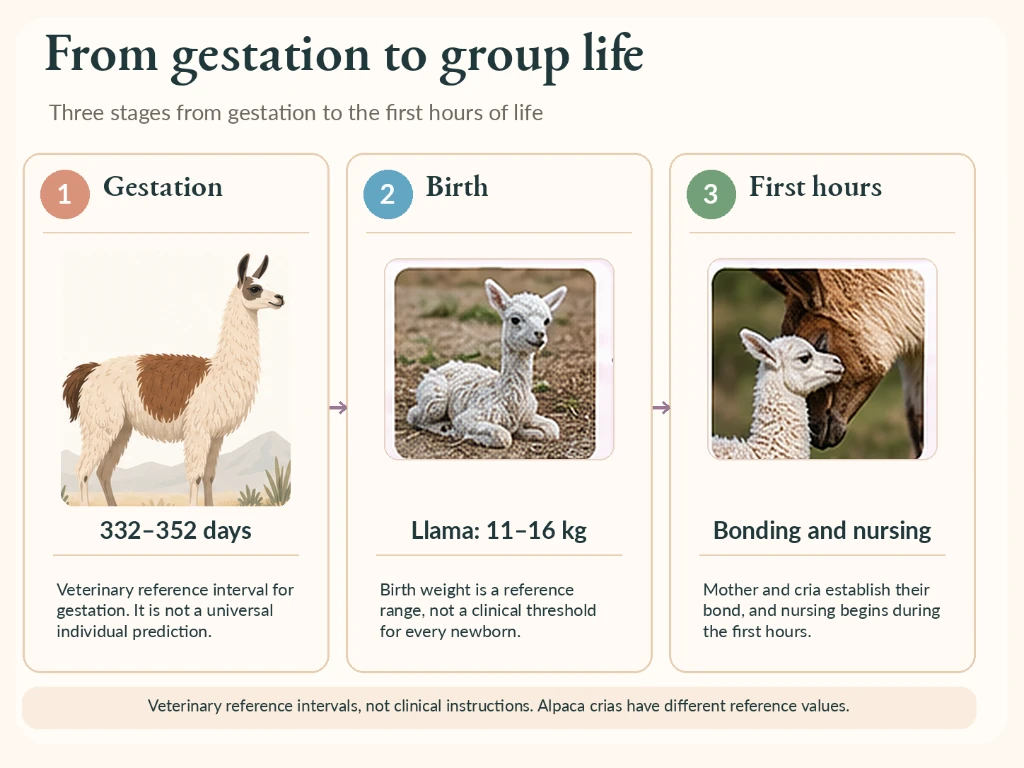
Three-compartment digestion, forage checklists, copper balance, body condition scoring (BCS), gestation and neonatal care, vocalisations and farm housing.
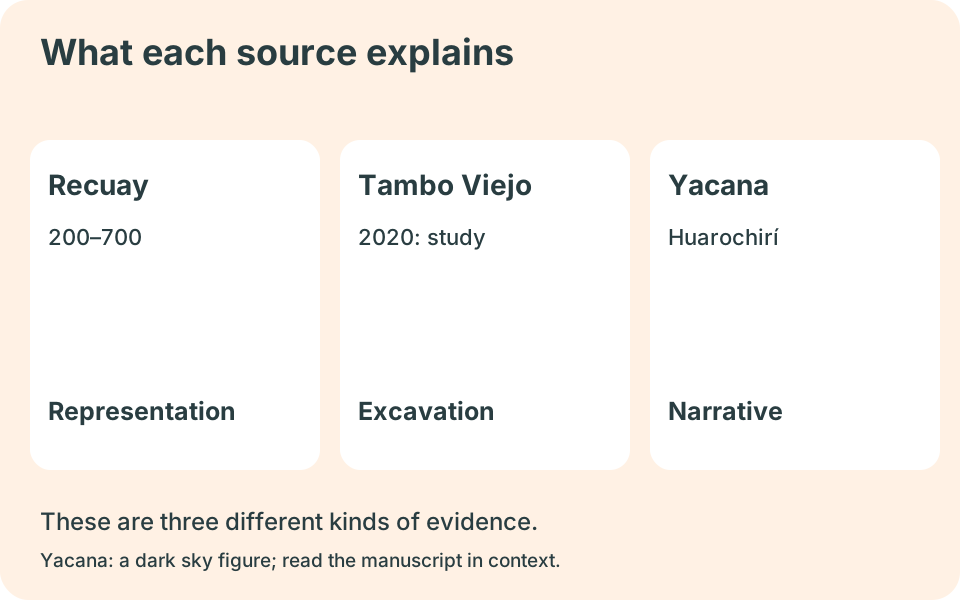
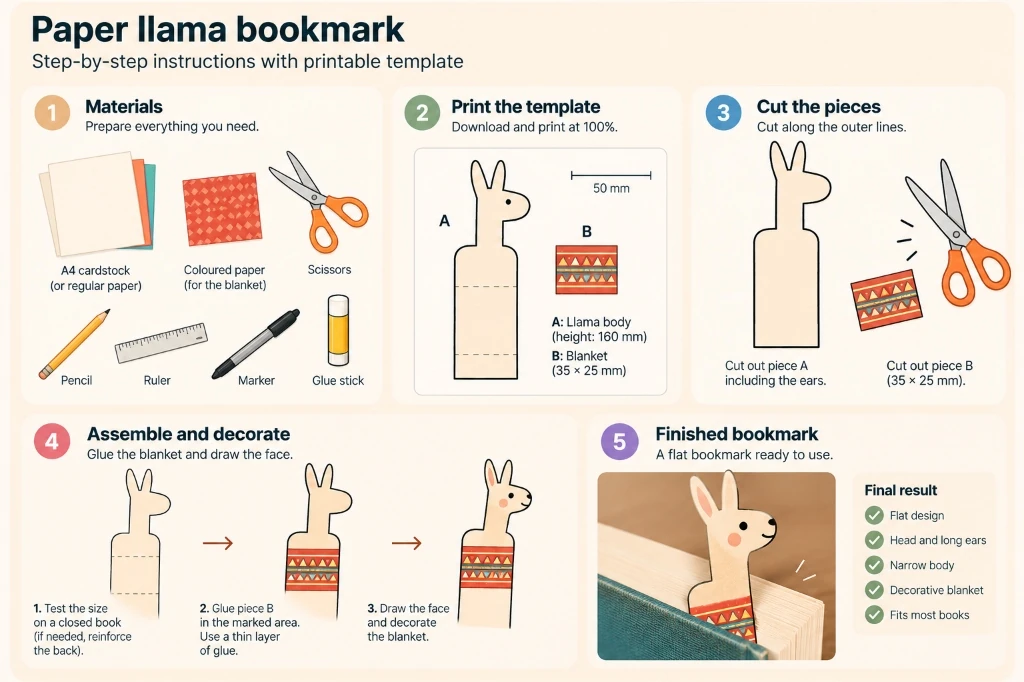
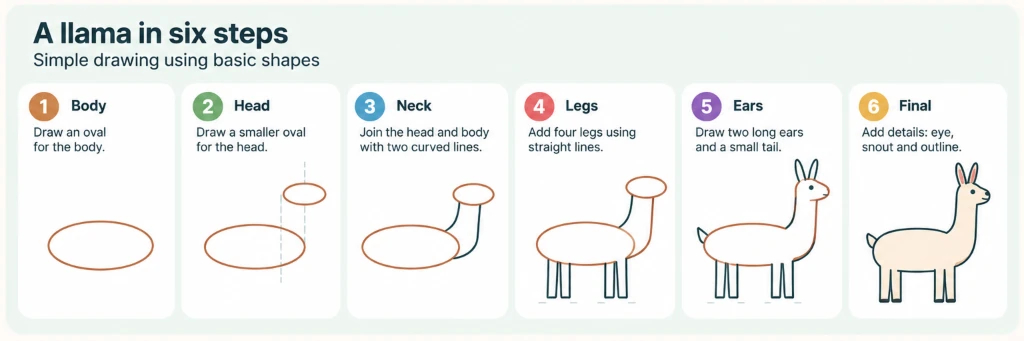
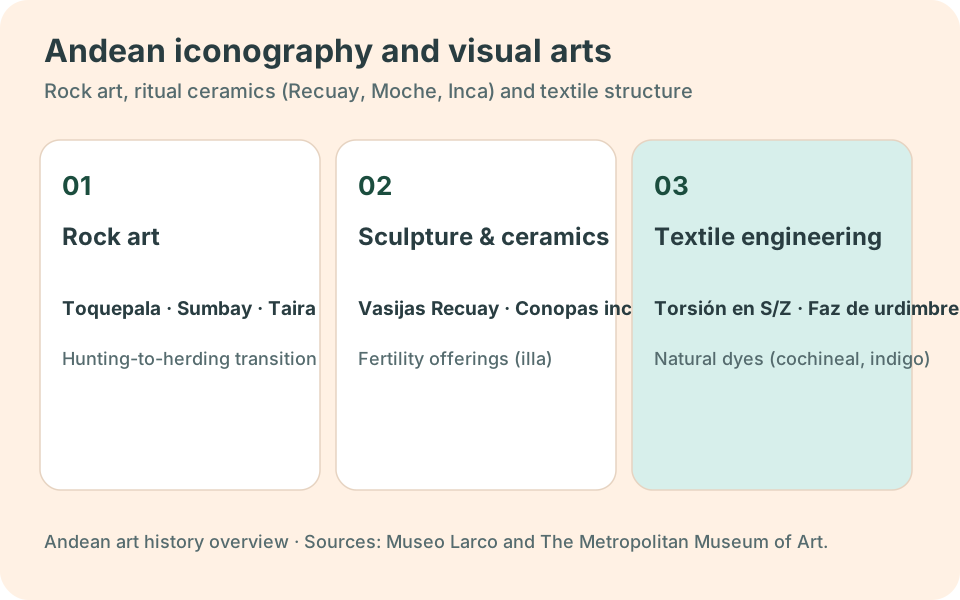
Recuay vessels, Inca offerings at Tambo Viejo, the dark constellation Yacana, microscopic structure of llama fibre, and printable A4 drawing and papercraft guides.
Camelid identification, forage calculator and biology quiz
Use these interactive tools based on FAO manuals, Penn State Extension nutritional guides, Merck Veterinary Manual references and genomic research (Fan et al., 2020) to compare the four South American camelids, estimate dry-matter forage intake and body condition score (BCS), and test your knowledge.
Tool 1 · Morphology & Taxonomy
Interactive 4-Camelid Field Identifier & Comparator
Answer the observation questions below to identify which South American camelid you are seeing, or select any species tab to inspect its complete biological profile.
Quick visual identification key
Most consistent identification:
Llama (Lama glama) — Domestic
Largest of the four South American camelids (130–200 kg adult mass). Distinguished by long inwardly curved ears, a hairless muzzle without a dense forehead topknot, a straight dorsal line and diverse coat colours. Domesticated from the guanaco ~4,000–5,000 years ago.
Reference biological comparison of the four South American camelids (all share karyotype 2n = 74)
Parameter
Llama (Lama glama)
Alpaca (Vicugna pacos)
Guanaco (Lama guanicoe)
Vicuña (Vicugna vicugna)
Status & ancestor
Domestic (from guanaco)
Domestic (from vicuña)
Wild ancestor of llama
Wild ancestor of alpaca
Adult body mass
130 – 200 kg
55 – 85 kg
90 – 140 kg
40 – 60 kg
Height at withers
110 – 120 cm
85 – 95 cm
100 – 115 cm
75 – 85 cm
Fibre diameter (µm)
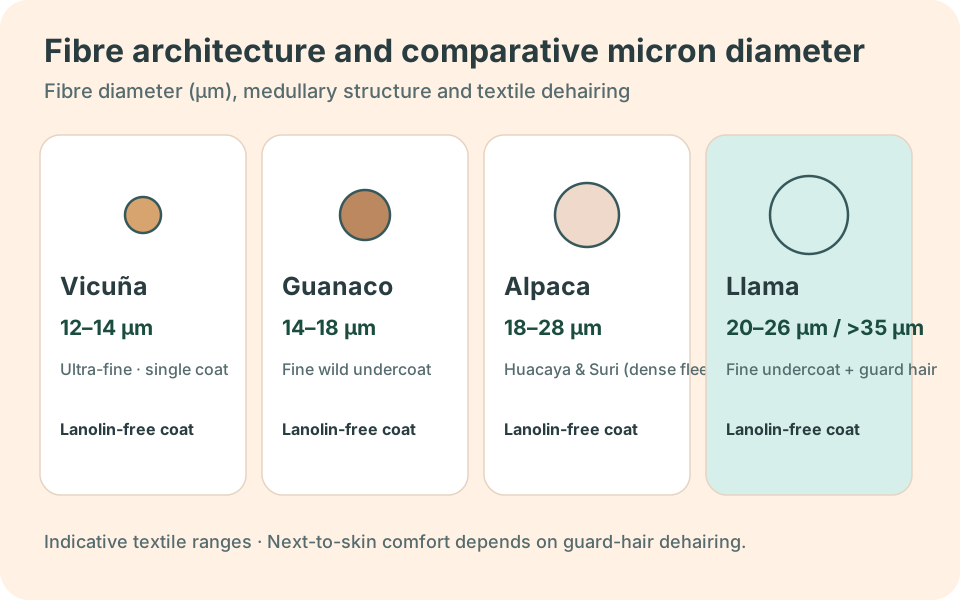
20–30 µm (undercoat) / 35–60 µm (guard)
18 – 28 µm (Huacaya / Suri)
16 – 18 µm (undercoat)
12 – 14 µm (finest natural fibre)
Lower incisors
Closed root, enamel on both sides
Elongated, continuous growth
Closed root, spatulate
Open root, enamel on labial side
Typical habitat
Andean altiplano (2,300–4,800 m) & farms
Humid puna & bofedales (3,500–4,800 m)
Sea level (Patagonia) to >4,000 m Andes
High Andean puna (3,700–5,000 m)
Tool 2 · Nutrition & Welfare
Orientative Dry-Matter Forage, Water & Body Condition (BCS) Calculator
Pseudoruminants have lower metabolic intake per kg than true ruminants, but need high-fibre forage, balanced trace minerals (especially copper-to-molybdenum ratios) and clean water. Values below are educational estimates based on Penn State Extension and Merck Veterinary Manual guidelines—always consult a veterinarian for ration formulation.
1. Animal parameters
45 kg (Juvenile / Alpaca)145 kg (Adult llama)210 kg (Large llama)
Daily reference estimates
Dry Matter (DM / day)2.2 – 2.6 kg
Grass hay (~88% DM)2.5 – 3.0 kg
Fresh water supply9 – 13 L / día
Target Crude Protein (DM)8 % – 10 % PB
Adult maintenance relies primarily on medium-to-good quality grass hay or pasture, free-choice clean water and a camelid-formulated mineral with appropriate copper balance.
2. Body Condition Score (BCS 1–5) palpation simulator
Because dense fleece conceals weight loss or obesity, always palpate the lumbar spine (behind the ribs), the ribs and the chest. Select a score below:
BCS 3 (Ideal condition): Dorsal and transverse processes of the lumbar vertebrae are felt smoothly with light firm pressure; the muscle loin profile is neither sunken (concave) nor bulging (convex). Ribs are palpable without sharp edges.
All documented guides and educational workshops
15 in-depth articles with verified bibliography, original diagrams and printable templates.
Key questions about llamas and South American camelids
Why do llamas spit and what does it mean?
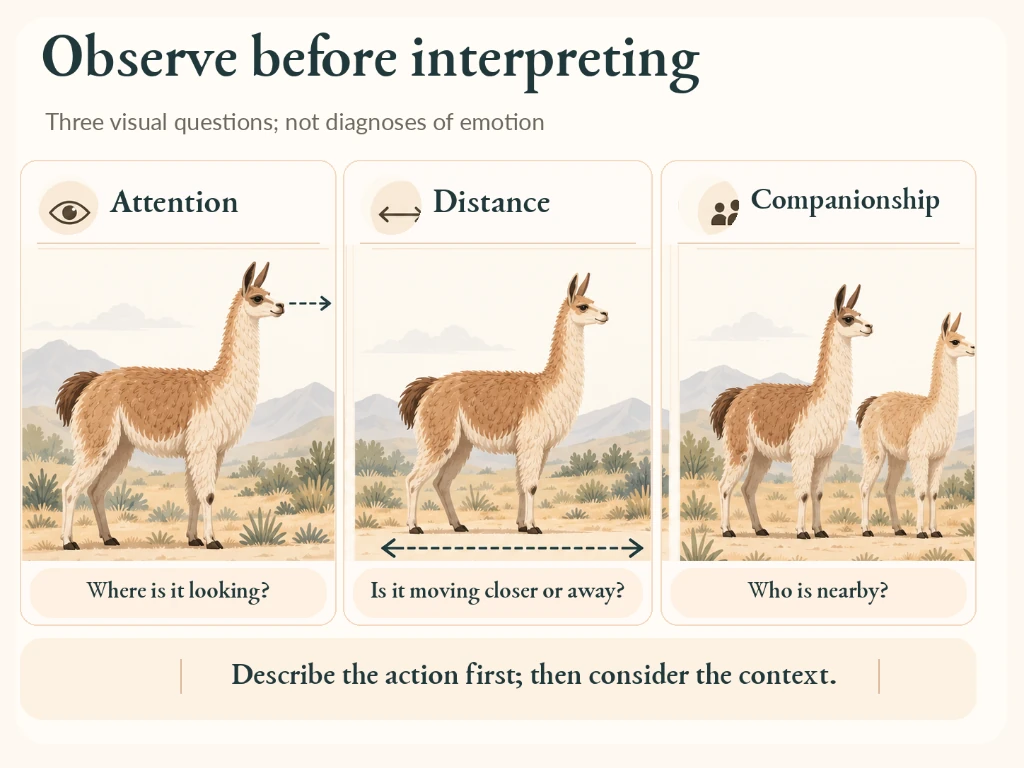
Spitting is primarily an intra-species social regulation behaviour used to establish feeding hierarchy, defend personal space or signal that a pregnant female rejects a male. Before spitting, a llama typically gives clear visual and acoustic warnings: pinning its ears back, raising its chin and emitting a warning hum or gurgle.
Can llamas and alpacas interbreed?
Yes. Because all four South American camelids share the exact same chromosome count (2n = 74), crosses between a male llama and a female alpaca (called a huarizo) or between a male alpaca and a female llama (called a misti) are viable and usually fertile. Genomic research shows extensive post-conquest introgression between both domestic species.
Can a single llama live alone on a farm?
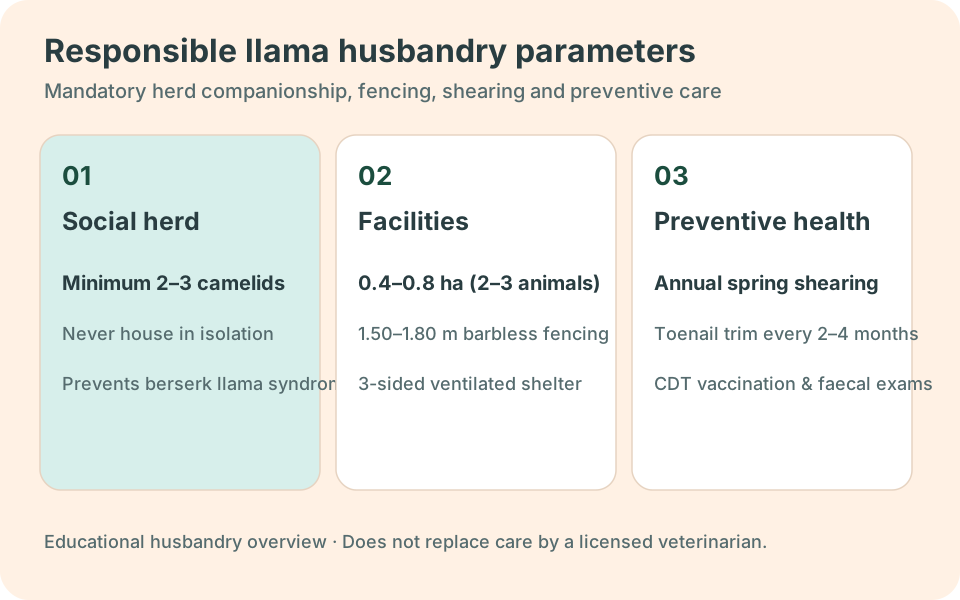
No. Veterinary management manuals emphasise that llamas are strictly gregarious herd animals. Keeping a llama in isolation causes chronic social stress, behavioural disorders (such as berserk male syndrome in hand-reared juveniles) and compromised welfare. They must always live with at least another camelid.
Are llamas true ruminants like cows or sheep?
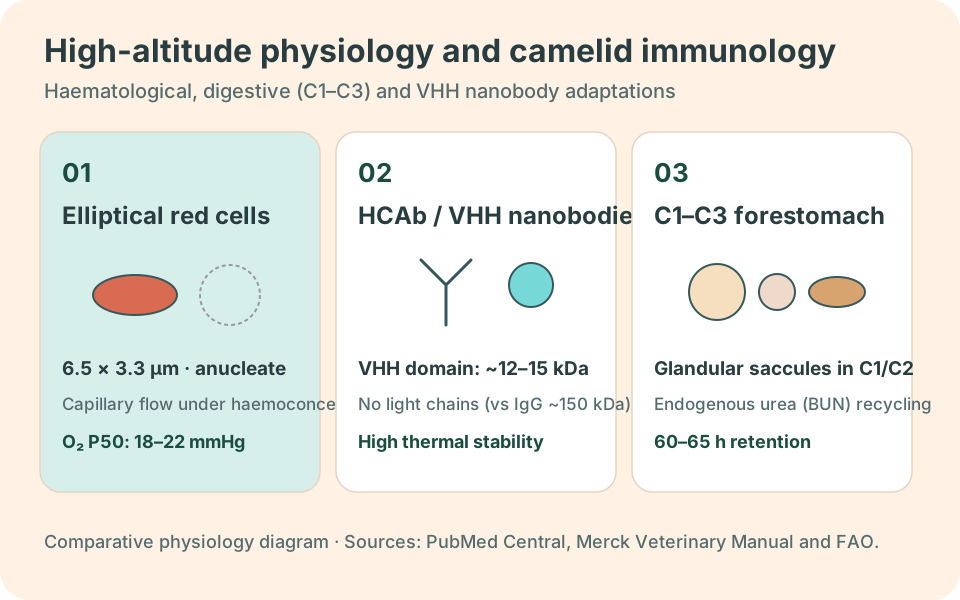
Llamas chew cud and ferment plant fibre microbially, but anatomically they are classified as pseudoruminants (suborder Tylopoda). Instead of four stomach chambers, they have three compartments (C1, C2 and C3) lined in specific regions with glandular saccules that aid buffering and urea recycling on low-protein highland pastures.